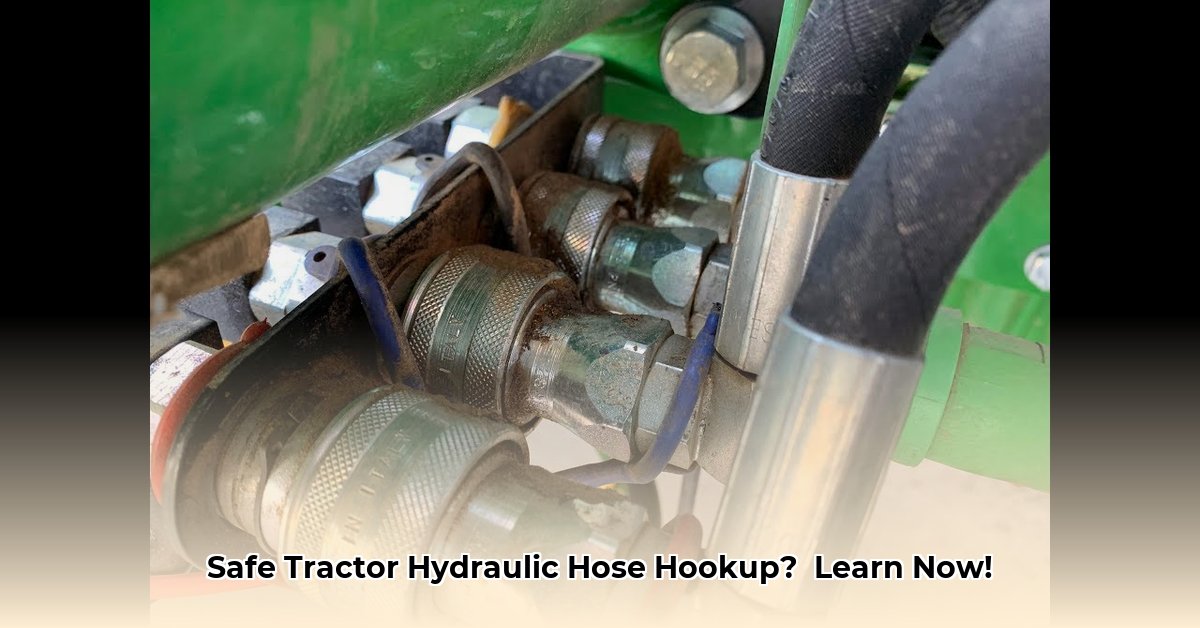
Connecting hydraulic hoses on your tractor can seem daunting, but with clear instructions and a focus on safety, it's a manageable task. This guide provides a step-by-step approach, suitable for tractor operators of all experience levels. For more heavy equipment maintenance, check out this guide on changing a trailer tire.
Preparing for Success: Safety First
Before you begin, prioritize safety. Hydraulic systems operate under high pressure; mishandling them can lead to serious injury or equipment damage.
Pressure Relief: The most crucial step is relieving system pressure. Consult your tractor's owner's manual for the specific procedure. This usually involves locating a pressure relief valve or carefully disconnecting a fitting to allow fluid to drain into a suitable container. Always refer to your owner's manual for the correct procedure for your specific tractor model.
Personal Protective Equipment (PPE): Always wear safety glasses and heavy-duty gloves. Consider long sleeves and closed-toe shoes for additional protection. (Even a small spray of high-pressure hydraulic fluid can cause serious injury).
Hose Inspection: Thoroughly inspect the hoses for cracks, bulges, or any signs of damage. Replace any damaged hoses immediately. (Damaged hoses are a major safety hazard and can cause catastrophic failure).
Cleaning Connections: Clean the connection points of dirt and debris using a clean rag. Contaminants can prevent a proper seal, leading to leaks. (Cleanliness is crucial for a secure and leak-free connection).
Gather Tools: You'll need a set of appropriately sized wrenches and, ideally, a torque wrench for precise tightening. Also, keep clean rags handy for cleanup. (Using the correct tools is essential to prevent damage and ensure a safe connection).
Understanding Hydraulic Hoses
Choosing the right hose is critical. Incorrect hoses can lead to leaks, system malfunctions, and equipment damage. Your owner's manual details the correct specifications. Key factors include:
- Pressure Rating: The hose must withstand the system's operating pressure. (Insufficient pressure rating can lead to ruptures and fluid leaks).
- Diameter: The hose diameter must match the fitting's size. (Incompatibility here will prevent a safe connection).
- Length: Select a hose length that allows easy connection without excessive slack. (Excessive length creates a tripping hazard and potential damage risk).
- Material Compatibility: The hose material must be compatible with the hydraulic fluid used in your tractor. (Incompatible materials can lead to hose degradation and system failure).
Connecting the Hoses: A Step-by-Step Guide
Confirm Pressure Relief: Double-check that all pressure has been released from the system. (Residual pressure can cause serious problems).
Reconnect and Secure: Carefully align male and female fittings. Push them together firmly until they seat properly. (A secure connection is essential to prevent leaks).
Tighten Fittings: Use the appropriate wrench to tighten the fittings to the manufacturer's specifications. A torque wrench is strongly recommended to prevent over-tightening, which can damage the fittings and cause leaks. (Over-tightening is a common cause of damage; use a torque wrench for accuracy).
Leak Check: Inspect all connections thoroughly for any leaks. If leaks are present, loosen the fitting, realign, and retighten. (Immediate detection and resolution of leaks are vital for safe operation).
Reconnect Equipment: Once connections are secure and leak-free, reconnect the hydraulic implement.
Working with Quick Disconnect Couplings (QDCs)
QDCs offer convenience, but require care. Mismatched QDCs won't connect, and some can release high-pressure fluid unexpectedly. Carefully review your owner's manual for instructions on your specific type of QDC. (Always follow the manufacturer's instructions for safe operation).
Troubleshooting
If you encounter problems, systematically review each step. Confirm pressure relief, inspect connections for leaks, and verify that the correct hose is used. If issues persist, consult your owner's manual or seek assistance from a qualified mechanic. (Don't attempt complex repairs beyond your skill level).
Essential Tools
| Tool | Purpose | Importance |
|---|---|---|
| Wrenches (assorted) | Tightening and loosening hydraulic fittings | Absolutely Essential |
| Torque Wrench | Precise tightening to prevent damage and leaks | Highly Recommended |
| Clean Rags | Cleaning connection points | Essential |
| Safety Glasses | Protecting your eyes from hydraulic fluid sprays | Absolutely Essential |
| Gloves | Protecting your hands from abrasions and hydraulic fluid | Highly Recommended |
By carefully following these steps and prioritizing safety, you'll be confident in connecting your tractor's hydraulic hoses. Remember, consulting your tractor's owner's manual is crucial for specific instructions and safety precautions related to your model.